Posts

Amazing features of Mars
Image
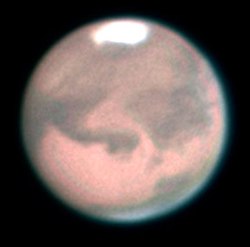
  An albedo feature is a large area on the surface of a planet (or other Solar System body) which shows a contrast in brightness or darkness (albedo) with adjacent areas. With these features we can study Mars from Earth through telescope. Vastitas Borealis (Latin 'northern waste') is the largest lowland region of Mars.  It is in the northerly latitudes of the planet and encircles the northern polar region.  Vastitas Borealis is often simply referred to as the northern plains, northern lowlands or the North polar erg of Mars.  The plains lie 4–5 km below the mean radius of the planet, and is centered at 87.73°N 32.53°E. The region was named by Eugene Antoniadi, who noted the distinct albedo feature of the Northern plains in his book La Planète Mars (1930).  The region is patterned with chains and polygons.  These are a result of the ice which is present in the soil reacting to drastic temperature fl...

Amazing stories of Agastya Muni- Part II

Image
 Once Agasthya thought he should marry. So he went in search of a suitable bride to the King of Vidarbha who had a daughter named  Lopamudra.  Agasthya met the king and said,“0 King, I want to marry your daughter.” Lopamudra agreed to marry Agasthya.  After marriage  she followed Agasthya .  She proved an excellent wife.  She obeyed every wish of his and never said a word in disagreement.  Agasthya was very happy to get such a dutiful wife. Once Lopamudra remembered the ornaments and silk sarees that she wore in the palace of her father.  So she said very hesitantly to Agasthya, “I want to wear ornaments and fine clothes. Please get me some.” She was the daughter of a king.  Hence it was natural that she should ask for such things.  And he felt that it was his duty to fulfill her . He went to emperors and monarchs and asked them for ornaments. Many kings, feeling happy and thinking that it was their good fortune to fulfill the wishe...

Amazing Stories of Agastya Muni- Part I

Image
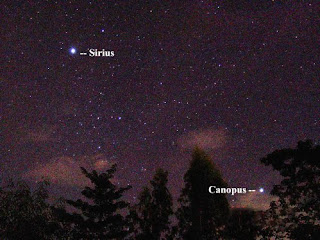
 Agastya, the star is said to be the 'cleanser of waters', and its rising coincides with the calming of the waters of the Indian Ocean.  It is thus considered the son of Pulastya, son of Brahma.  Canopus is described by Pliny the Elder and Gaius Julius Solinus as the largest, brightest and only source of starlight for navigators near Tamraparni island (ancient Sri Lanka) during many nights. Agastya appears in numerous itihasas and Puranas including the major Ramayana and Mahabharata.  He is one of the seven most revered rishis (the Saptarishi) in the Vedic texts.  He is also revered in the Puranic literature of Shaktism and Vaishnavism. He is one of the Indian sages found in ancient sculpture and reliefs in Hindu temples of South Asia, and Southeast Asia such as in the early medieval era Shaiva temples on Java Indonesia. Sage Agastya in seated posture.  This sculpture is from Angkor period, Cambodia, c. 975 CE. He is the principal figure and Guru in the anc...

Canopus (Agasthya)

Image
   The star-studded sky , What a wonderful sight !! That star in the southern sky, the star Agastya, how bright it is!  ‘What a great sage!’ we reflect. The star reminds us of his magnificent life. It is known as Canopus  in Western countries.  Canopus is the brightest star in the southern constellation of Carina and the second-brightest star in the night sky.  It is also designated α Carinae, which is Latinised to Alpha Carinae. With a visual apparent magnitude of −0.74, it is outshone only by Sirius.  Located around 310 light-years from the Sun, Canopus is a bright giant of spectral type A9, so it is essentially white when seen with the naked eye.  It has a luminosity over 10,000 times the luminosity of the Sun, is eight times as massive, and has expanded to 71 times the Sun's radius.  Its enlarged photosphere has an effective temperature of around  7,400 K.  Canopus is undergoing core helium burning and is currently in the so-cal...

Centaurus(नरतुरंग)

Image
Centaurus  is a bright constellation in the southern sky. Indian  name is Narturang (नरतुरंग).  One of the largest constellations, Centaurus was included among the 48 constellations listed by the 2nd-century astronomer Ptolemy, and it remains one of the 88 modern constellations.  In Greek mythology, Centaurus represents a centaur; a creature that is half human, half horse (another constellation named after a centaur is one from the zodiac: Sagittarius).  Notable stars include Alpha Centauri, the nearest star system to the Solar System, its neighbour in the sky Beta Centauri, and V766 Centauri, one of the largest stars yet discovered. The two bright stars are (left) Alpha Centauri and (right) Beta Centauri. The faint red star in the center of the red circle is Proxima Centauri.  The constellation also contains Omega Centauri, the brightest globular cluster as visible from Earth and the largest identified in the Milky Way, possibly a remnant of a dwarf galaxy...

Crux & Trishanku

Image
Crux, or the Southern Cross, is a prominent constellation in the southern sky.  It is the smallest of all 88 constellations. In spite of its size, Crux is one of the best known constellations in the southern hemisphere.  It is easily recognizable for the cross-shaped asterism, the Southern Cross, formed by its five brightest stars.  The constellation is associated with a number of stories and it figures prominently in different mythologies in the southern hemisphere.  It holds special importance in Australia and New Zealand, where it is circumpolar and can be seen throughout the year. Crux means “the cross” in Latin.  The Southern Cross carries cultural significance in many countries in the southern hemisphere. A stone image of Crux constellation has been found in Machu Picchu in Peru.  The Inca knew the constellation as Chakana, which means “the stair.” The Maori called it Te Punga, or “the anchor.” In Australian Aboriginal astronomy, the cross asterism an...

Manu's fish & Noah’s Ark

Image
 Manu, in the mythology of India, the first man, and the legendary author of an important Sanskrit law code, the Manu-smriti (Laws of Manu).  The name is cognate with the Indo-European “man” and also has an etymological connection with the Sanskrit verb man-, “to think.”  Manu appears in the Vedas, the sacred literature of Hinduism, as the performer of the first sacrifice.  He is also known as the first king, and most rulers of medieval India traced their genealogy back to him, either through his son (the solar line) or his daughter (the lunar line). In the story of the great flood, Manu combines the characteristics of the Hebrew Bible figures of Noah, who preserved life from extinction in a great flood, and Adam, the first man. Flood myth , also called deluge myth, any of numerous mythologies in which a flood destroys a typically disobedient original population.  Myths of a great flood (the Deluge) are widespread over Eurasia and America.  The flood, with ...